GUIDEBOOK - MULTIPLAYER (CANADIAN)
This guidebook outlines how to play the multiplayer version of culturecapital.
INTRODUCTION
culturecapital is a special place where the line between culture and capital has disappeared.
More specifically—culturecapital is a trading card game and live art performance that reflects upon how value is determined and shifted within performing arts industries.
The game is based on two sets of data:
1. municipal, provincial, and federal public funding data for performing arts companies across a specific province or region, and,
2. interviews with artists about their experiences working in the performing arts.
WHAT DO YOU NEED TO PLAY?
The game box contains all the components needed to start playing culturecapital:
(1) Deck of 180 cards
(24) Grant Tokens
(1) Leader Badge
(1) Community Organizer tablet
(1) 6-sided die
SETTING UP THE TABLE
SPLIT THE DECK
Separate the Card types and Tokens and distribute them as follows:
15 Community Cards are placed in the centre of the table in a pile, face down.
Company, Project, Strategy and Fact Cards are divided into four decks and placed face down.
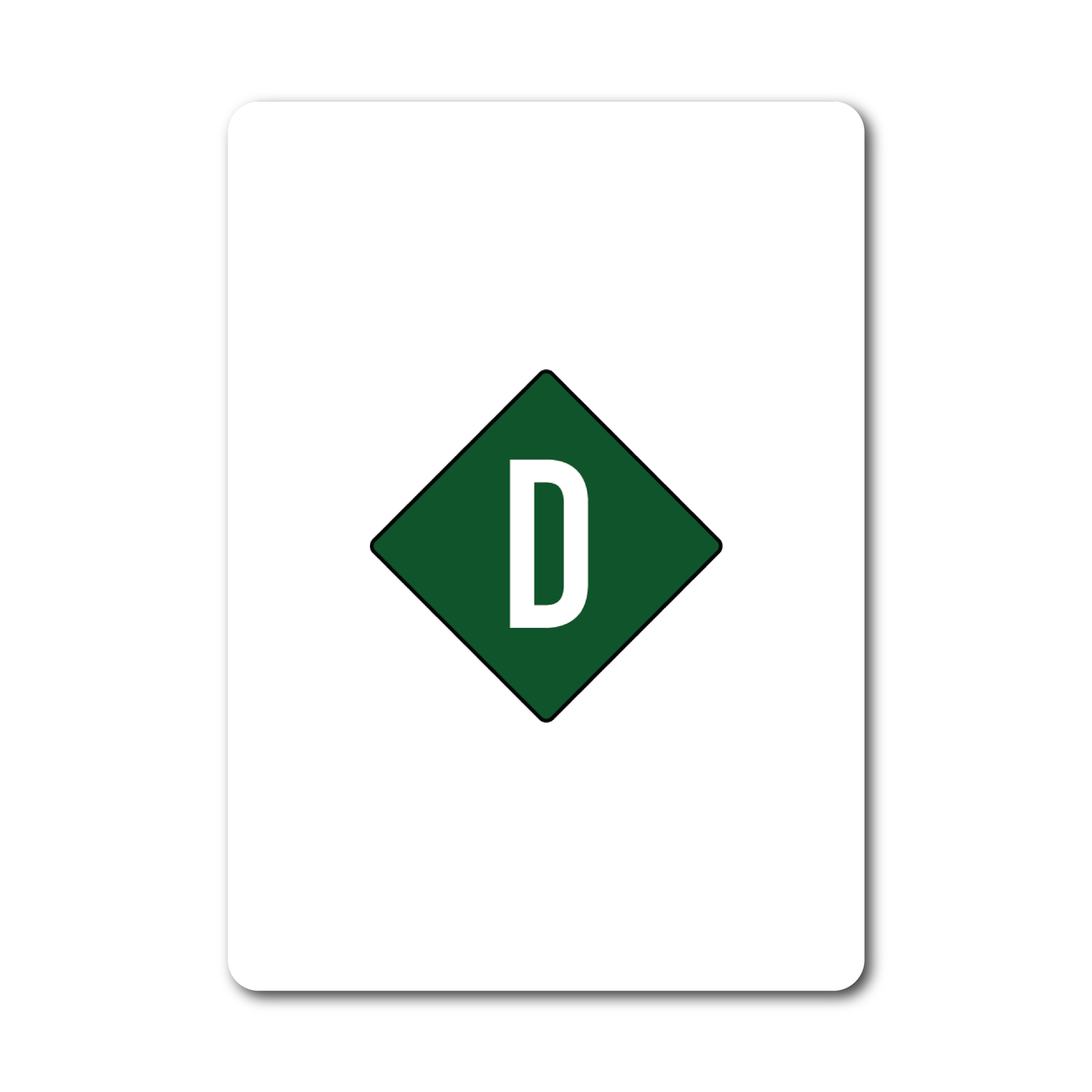
Priority Cards are distributed so each Player has one of every kind: A, B, C D.
Community Organizer and Grant Tokens are placed in the centre of the table.

DISTRIBUTING THE FIRST HAND
Each Player begins the game with 7 cards:
(2) Company Cards
(2) Project Cards
(3) Additional cards from any of the four types (Companies, Projects, Strategies or Facts).
THE LEADER
At the beginning of the game, choose the Player who will start the game. This Player receives the Leader Badge, which will be passed clockwise to the next Player at the end of each turn.

ROUND ORDER
At the beginning of every turn, the Player with the Leader Badge fills Communities by flipping the top cards from the Community deck and placing them in the centre of the table until there are FOUR face up Communities on the table. Players should be able to see all of them.
Each Round is divided into two phases: Planning and Competition. Playing through both of these parts constitutes a “round”.
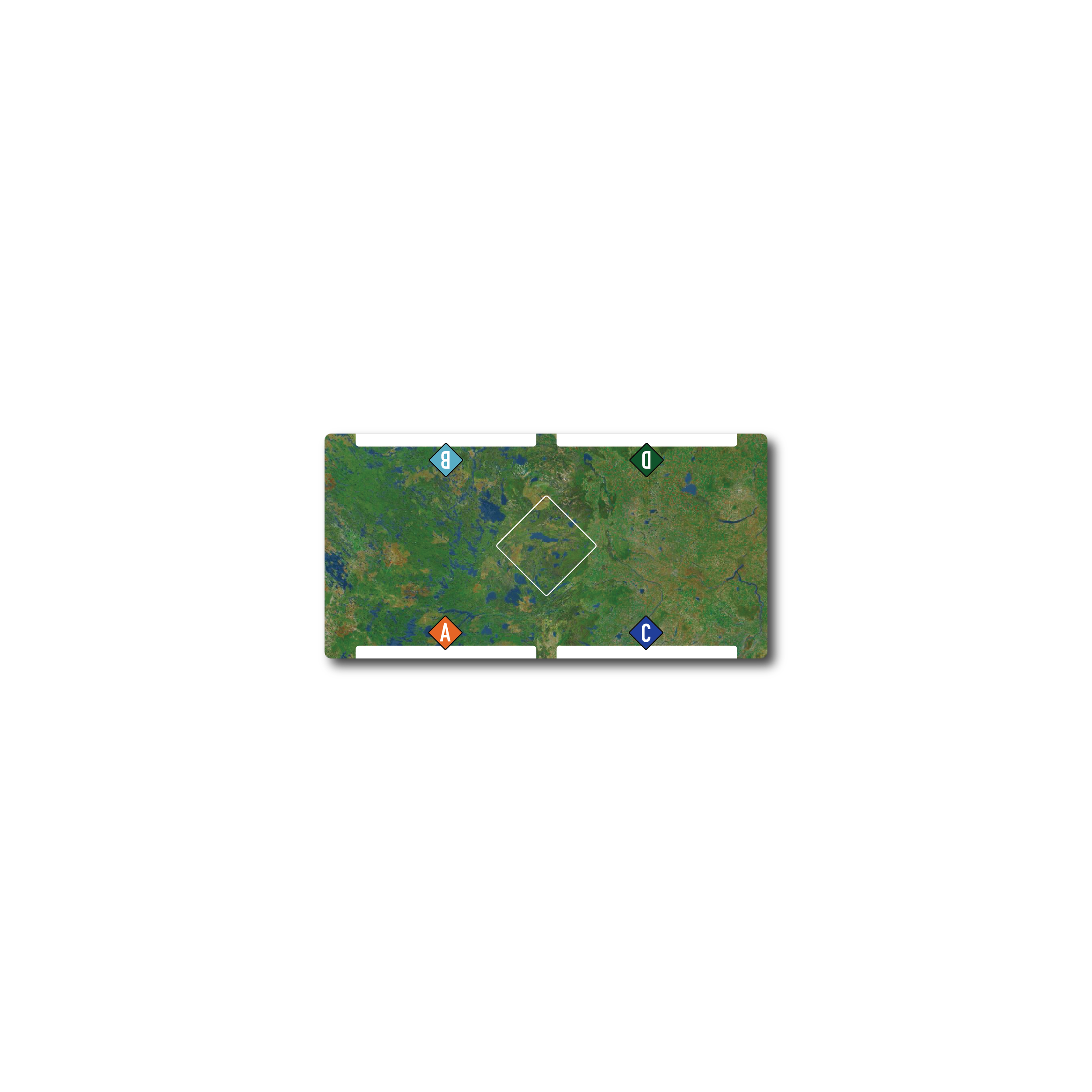
The centre of the table during gameplay should look something like this:

Each Player’s space during gameplay will be organized something like this, with Companies at the bottom, then Projects, Grant Tokens on their Projects, then Facts played above Projects.

HOW DO YOU WIN CULTURECAPITAL?
At the end of the game, each Player will add up the points of the Communities they have managed to obtain. Some Communities are worth more than others; and if a Player has 2 or more Communities from the same Community Group, they will receive an additional Community Point for each card from the same community.
The Player with the most Community Points wins the game.
CARD TYPES + GAME PIECES
-
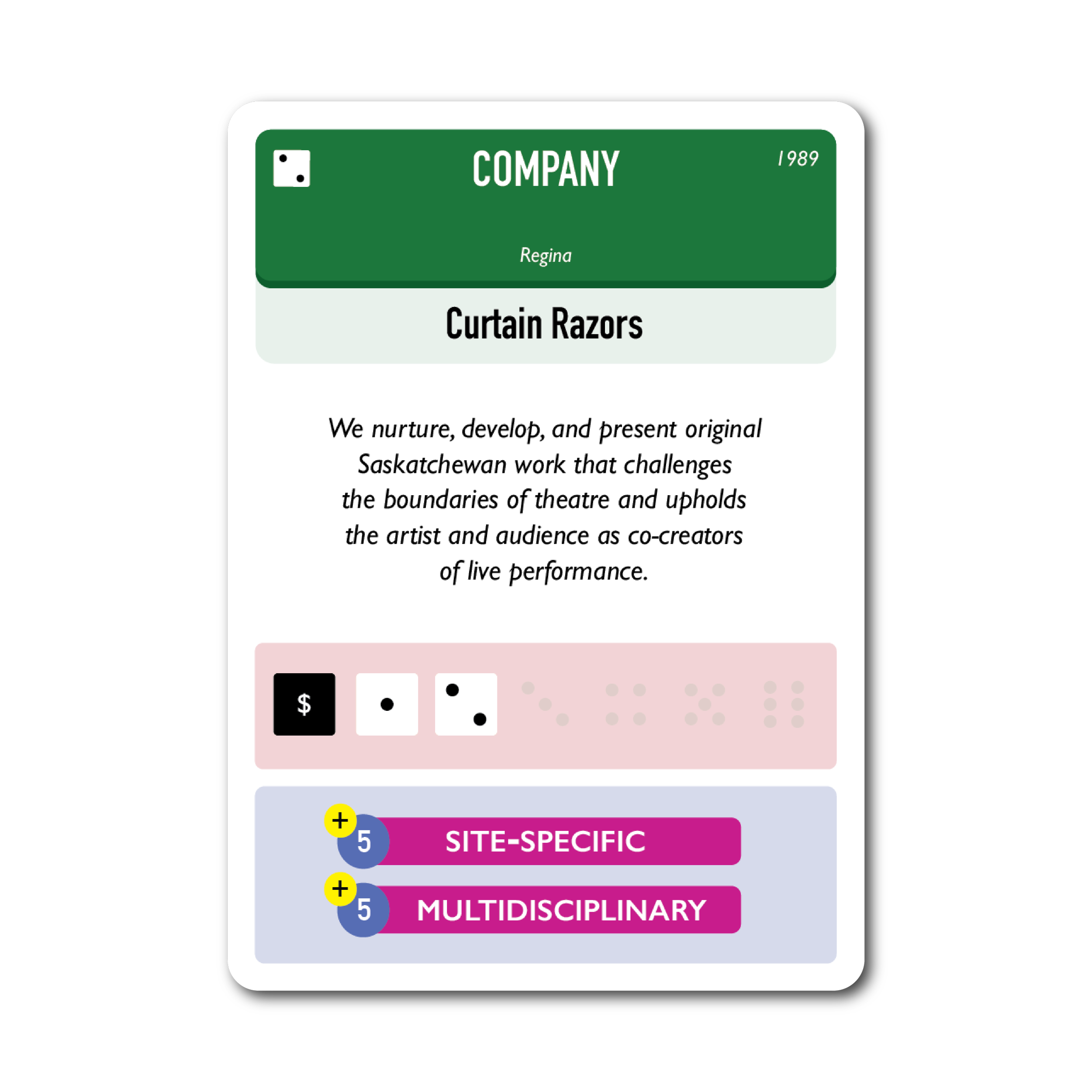
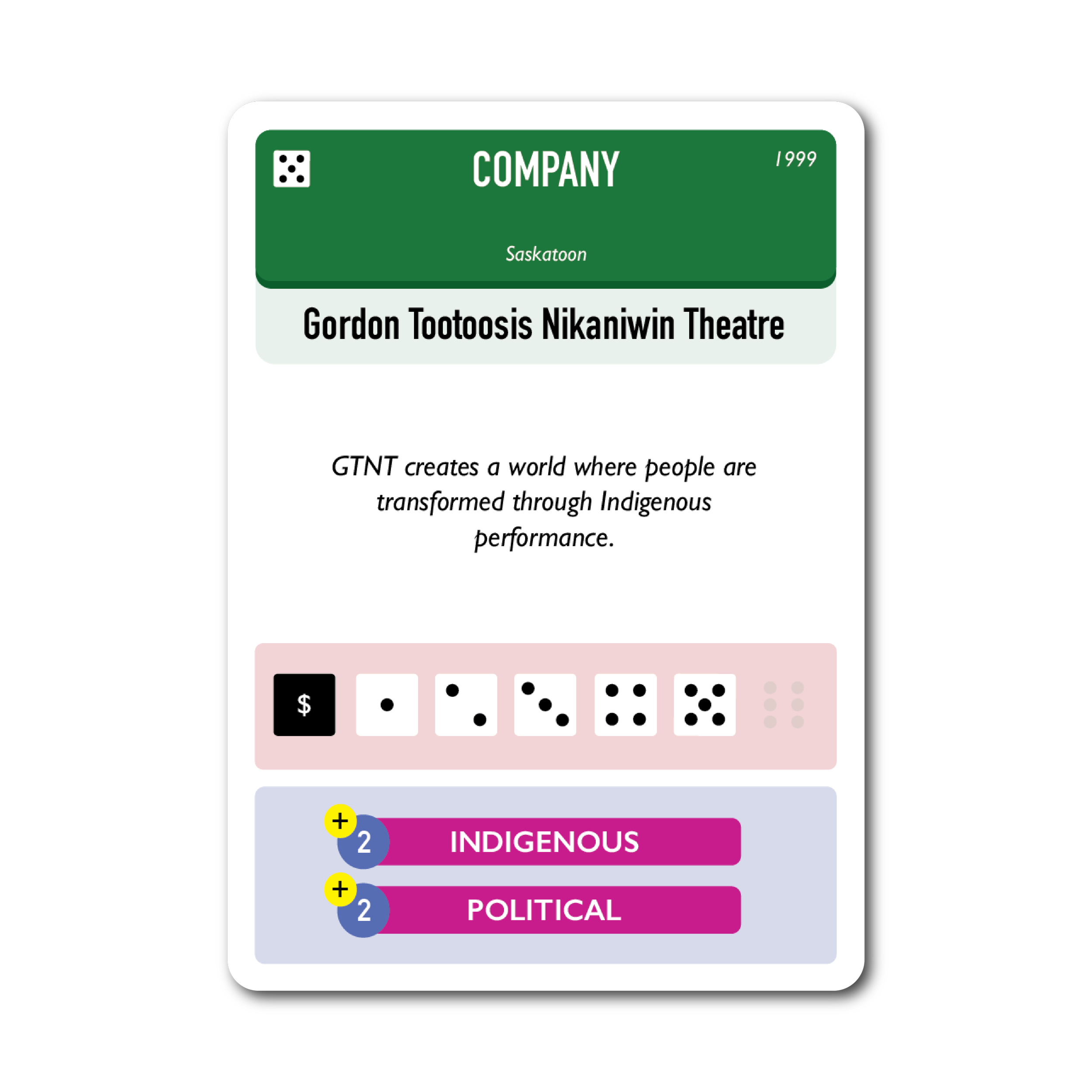
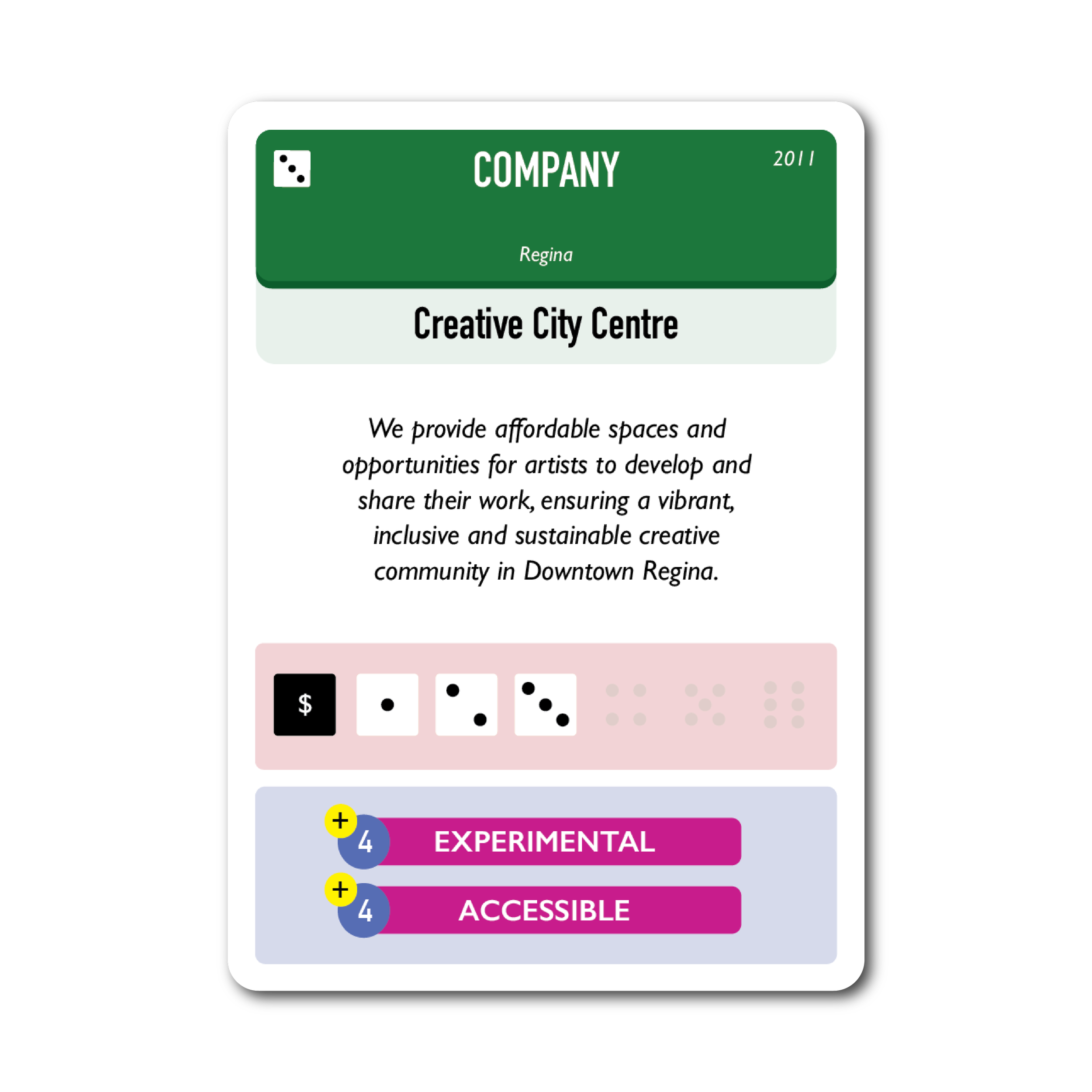
Most cultural programming is carried out through Companies (institutions, spaces, collectives, etc.) that more or less dependent on public funding. They are the foundation of culturecapital. On each Company card there are three key pieces of information used in gameplay:
Grant Power (GP) is calculated based on the average annual public income of each Company in real life. It is indicated with the symbol of currency and dice.
Keywords define a Company’s artistic profile; each Company has two.
Boosts express the Company’s level of specializing in the keywords. If a project keyword matches with a company keyword or a community keyword, it receives a bonus boost on the project’s power.
A Company can produce a Project without matching keywords, though in this case, the Project does not receive a bonus.
On each card you can also find the year the Company was founded and a motto that defines the Company (taken directly from the Company’s website).
-
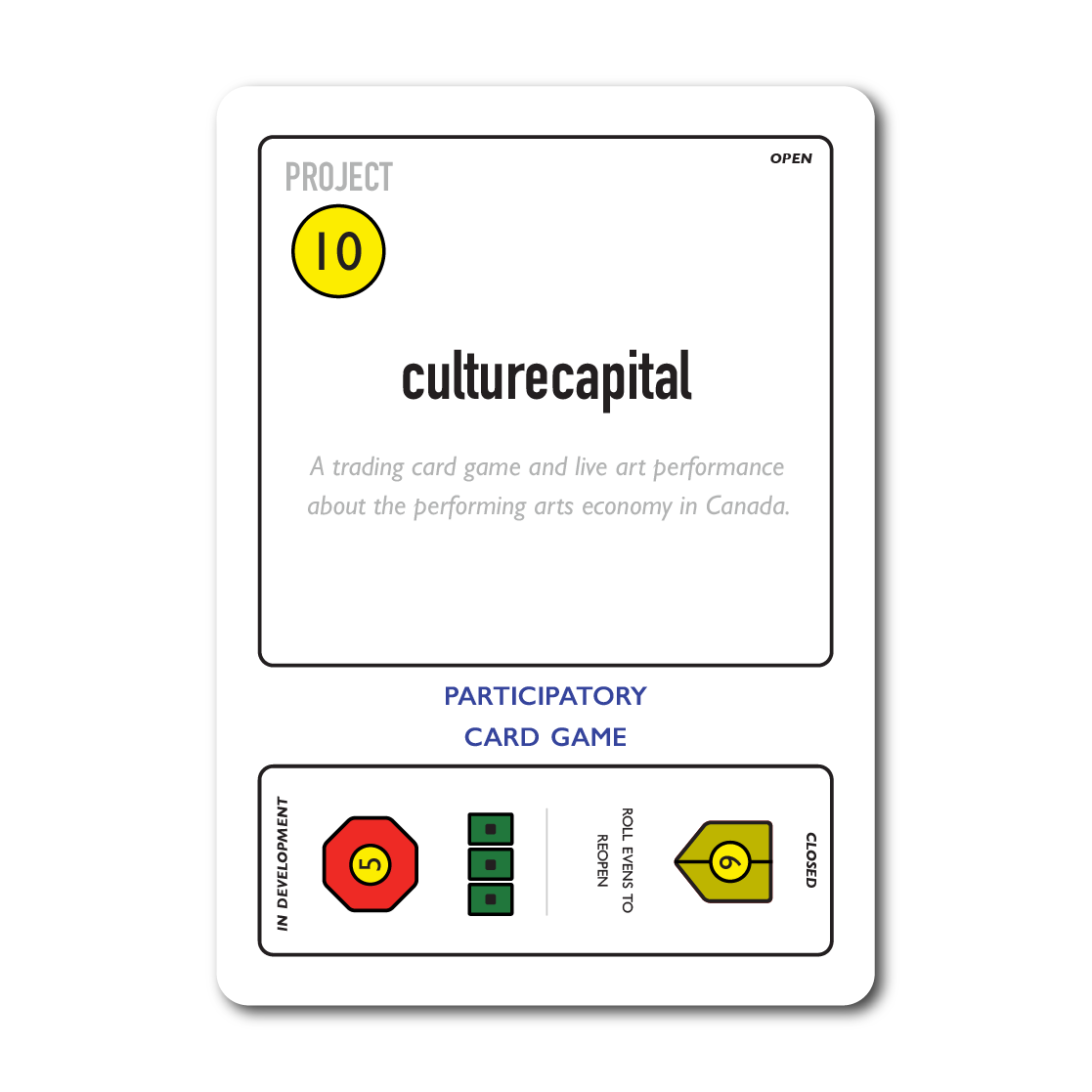
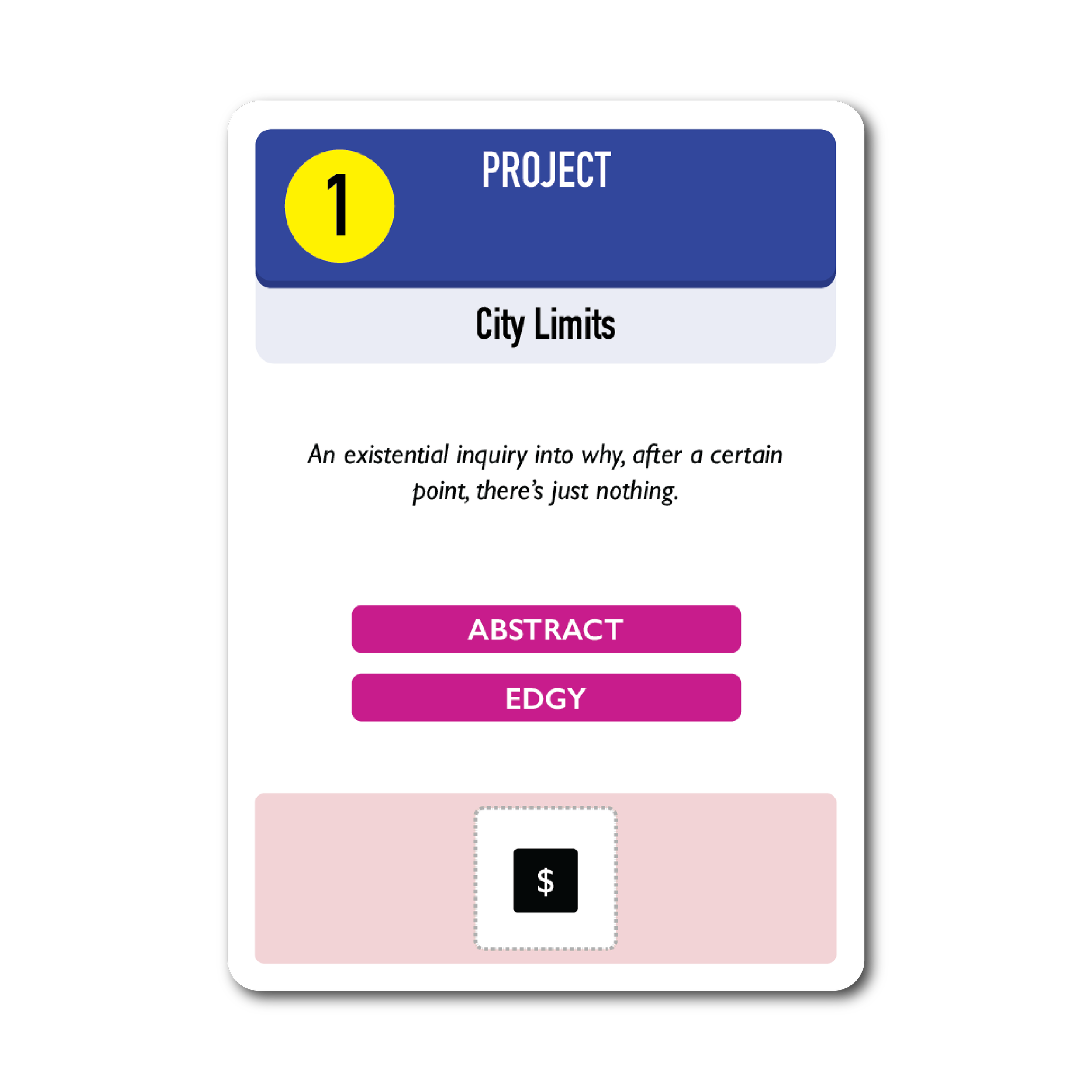
The Projects in culturecapital are a mix of fictional productions that are either similar to works that have been done in the region before and/or could be produced, given the formal and aesthetic histories.
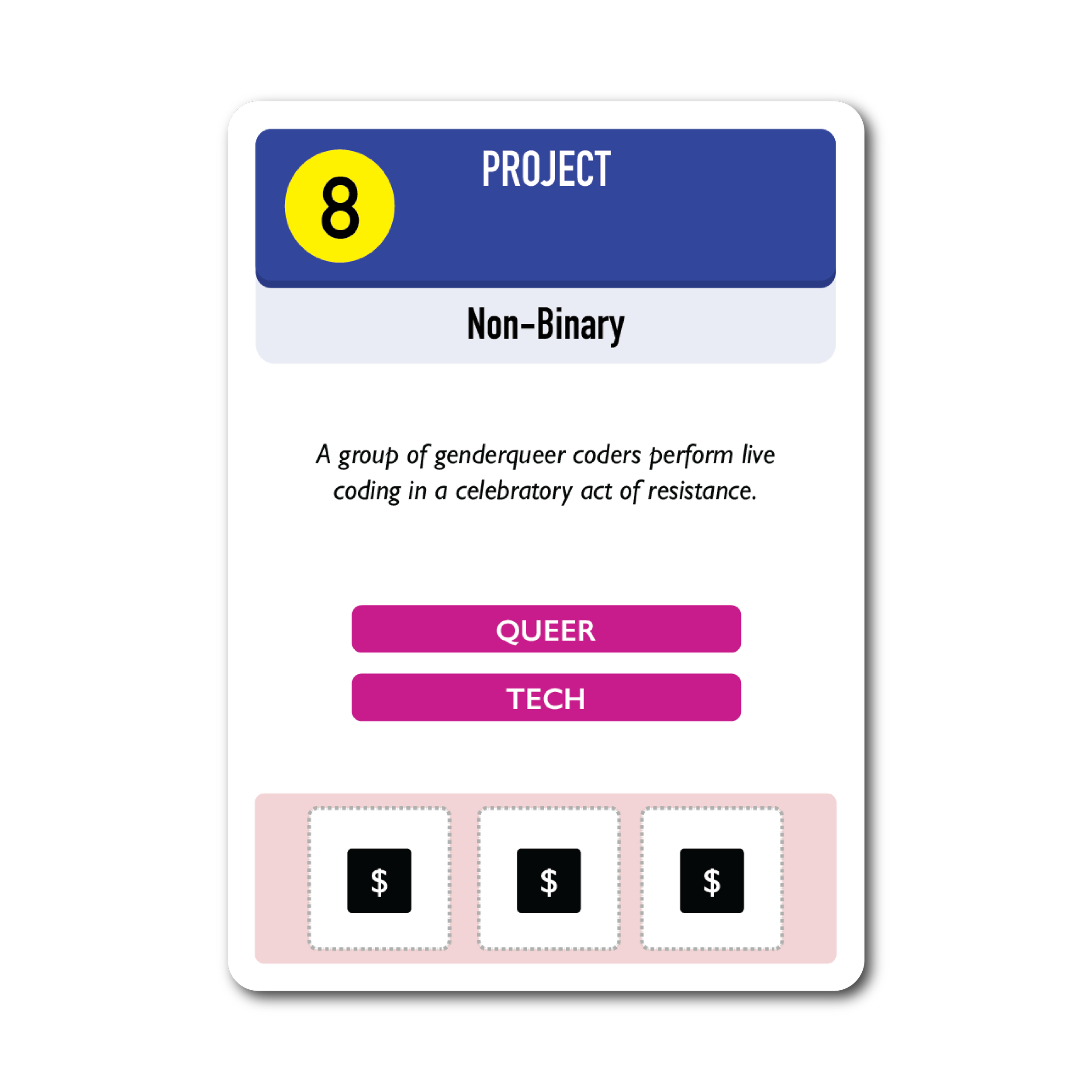
On each Project card you will find three pieces of information used in gameplay:
Value of the Project is indicated in yellow at the top left. The more powerful the Project, the more Grant funding it needs in order to open.
Grant Tokens required to launch the particular Project (between 1 and 3 Grants). Projects will remain in development until it obtains this funding. Only then can it open and compete for Communities.
Keywords that give bonus power, if aligned with the attached Company and/or targeted Community.
If a Project keyword(s) matches with a Company keyword or a Community keyword, it receives a bonus boost on the project’s power.
-
GRANT TOKENS
Grant Tokens represent 1 Grant each.
They are obtained at the end of the Planning Phase if a Player/Company is successful with a roll of a die to obtain funding for a Project.
-
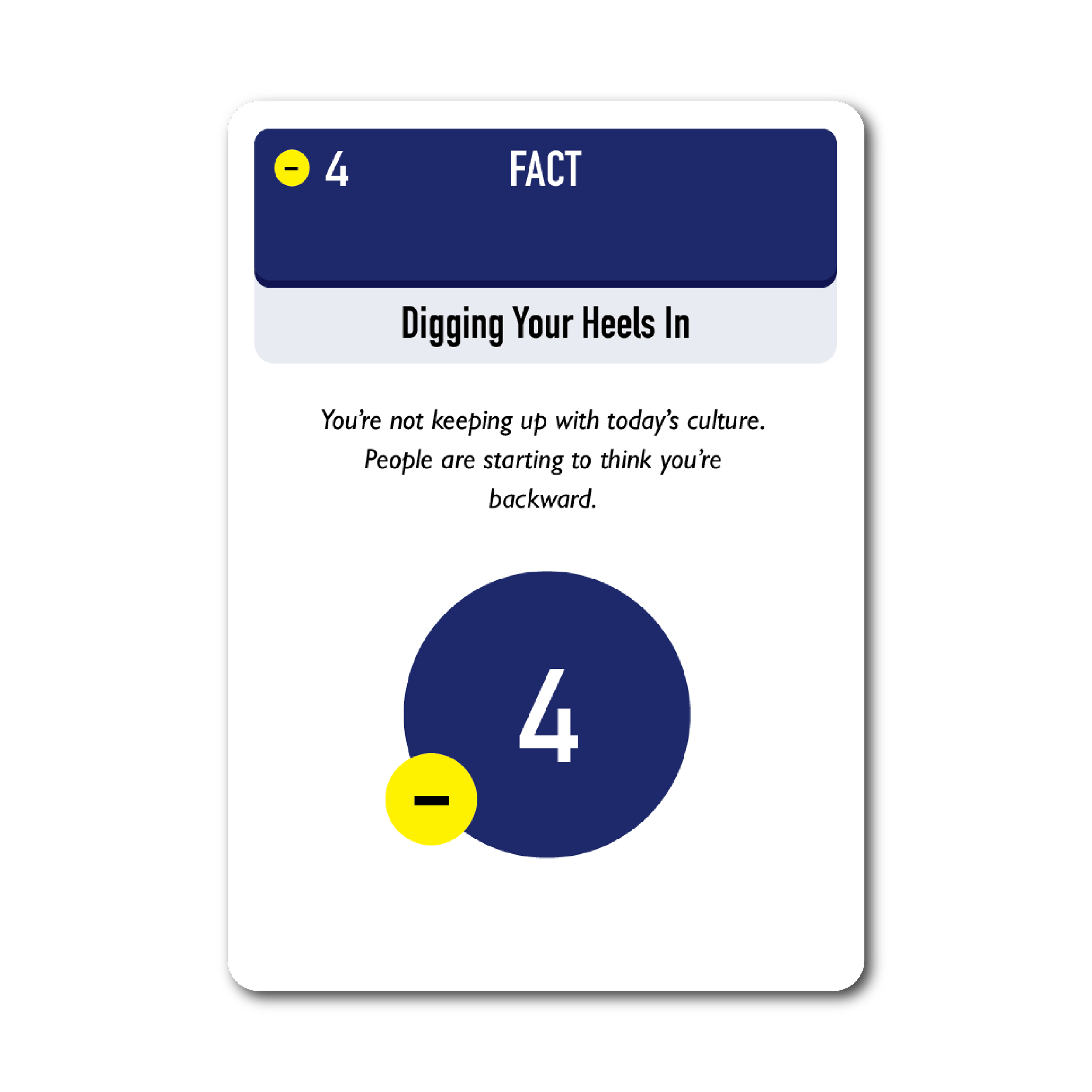
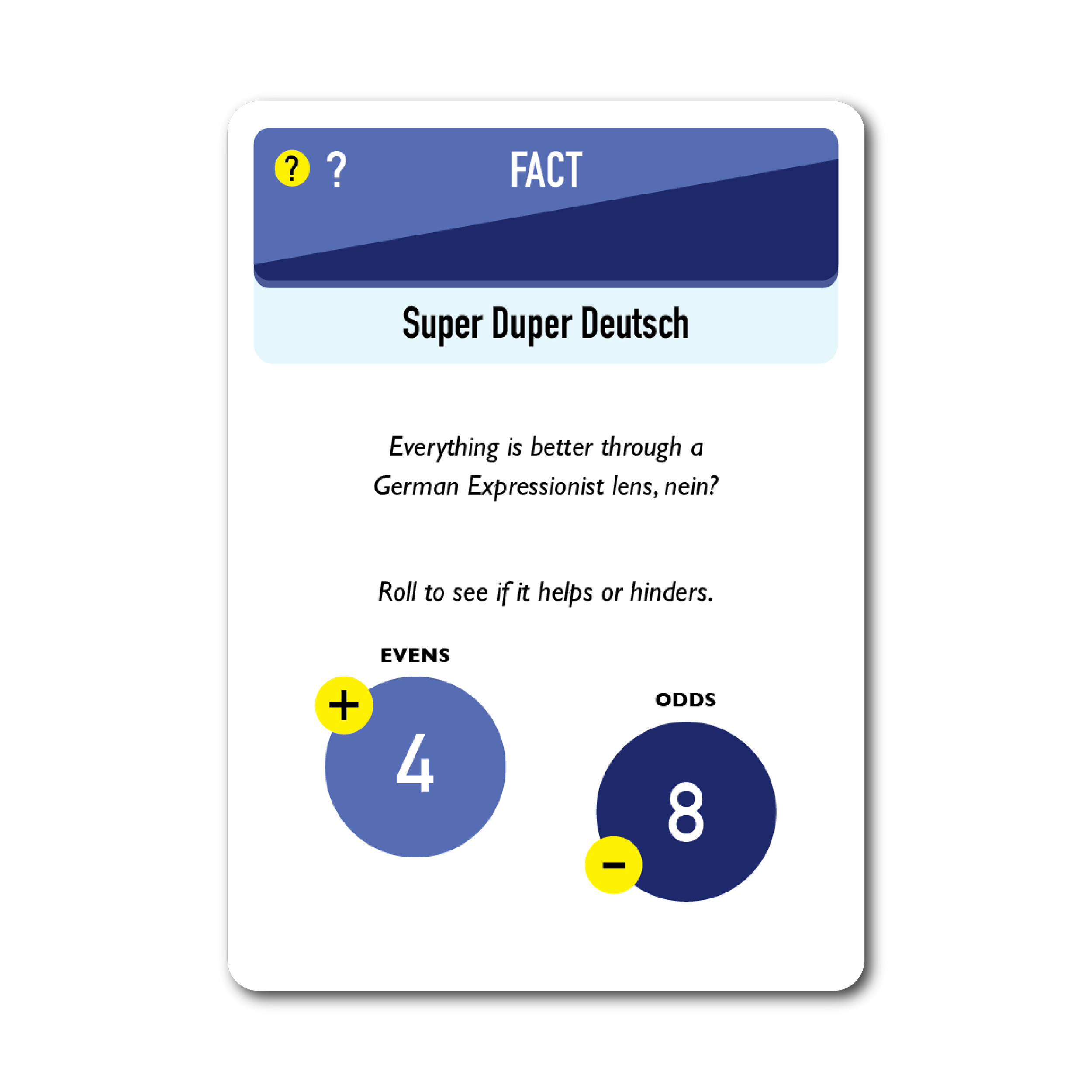
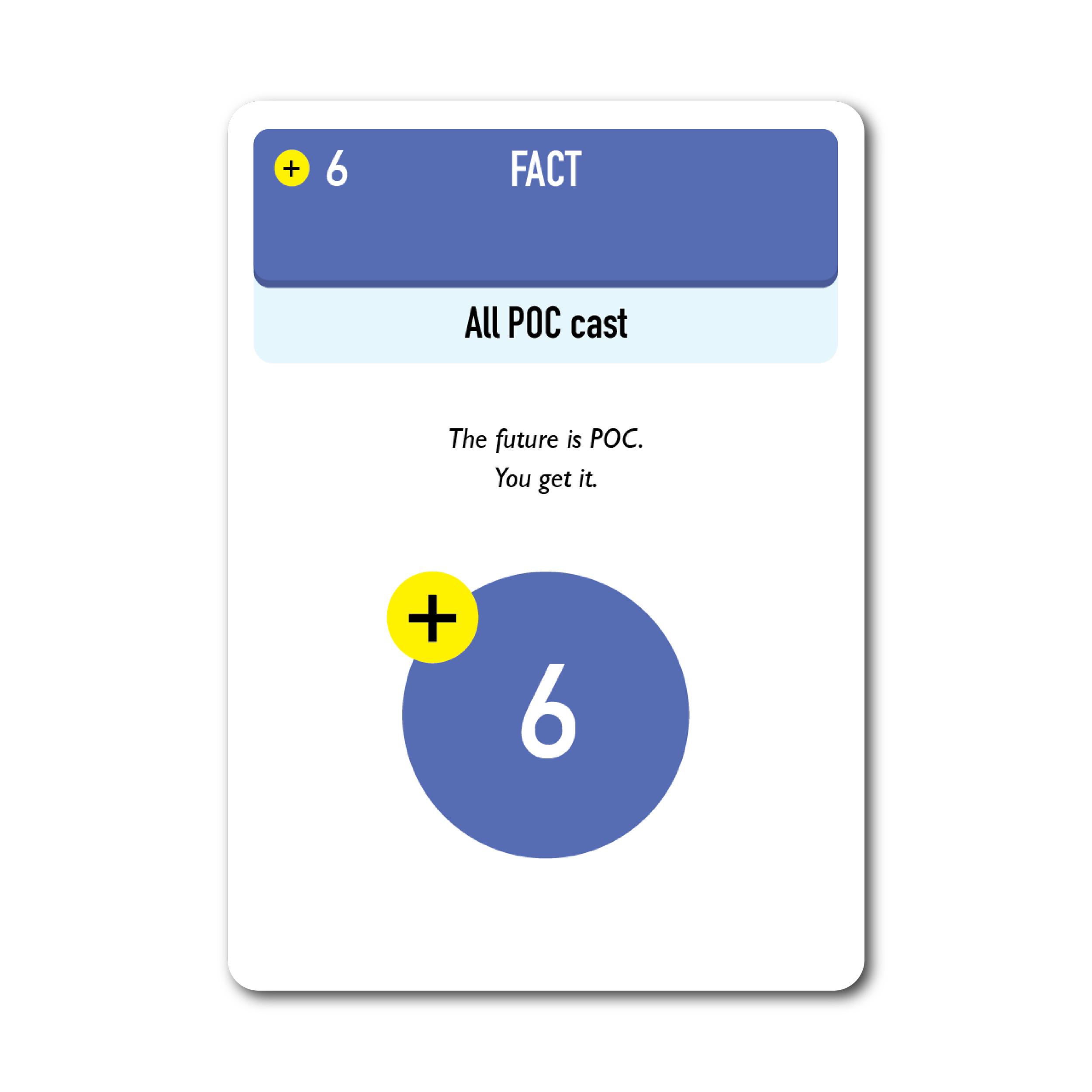
Facts shift the final value of a Project. After all, Projects are subject to the whims of good or bad reviews, a technical problem, and/or an unfortunate comment on social media.
On each Fact card you will find two pieces of information used in gameplay:
Modifying value of a Project, which can be positive or negative.
On some Fact cards, you’ll also find a Description of additional conditions. For these, you’ll need to roll to determine if the card’s impact will help or hinder your Project.
-
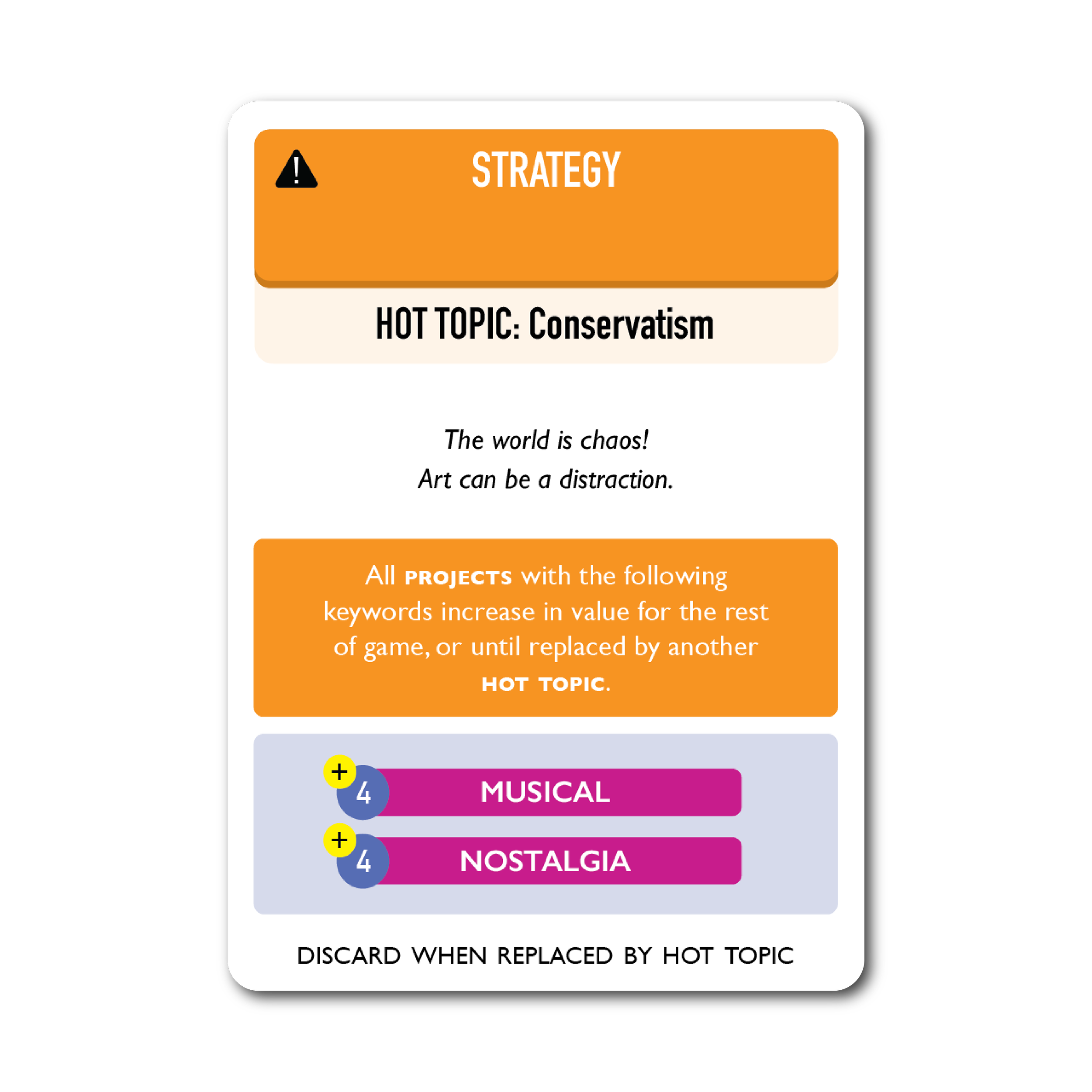
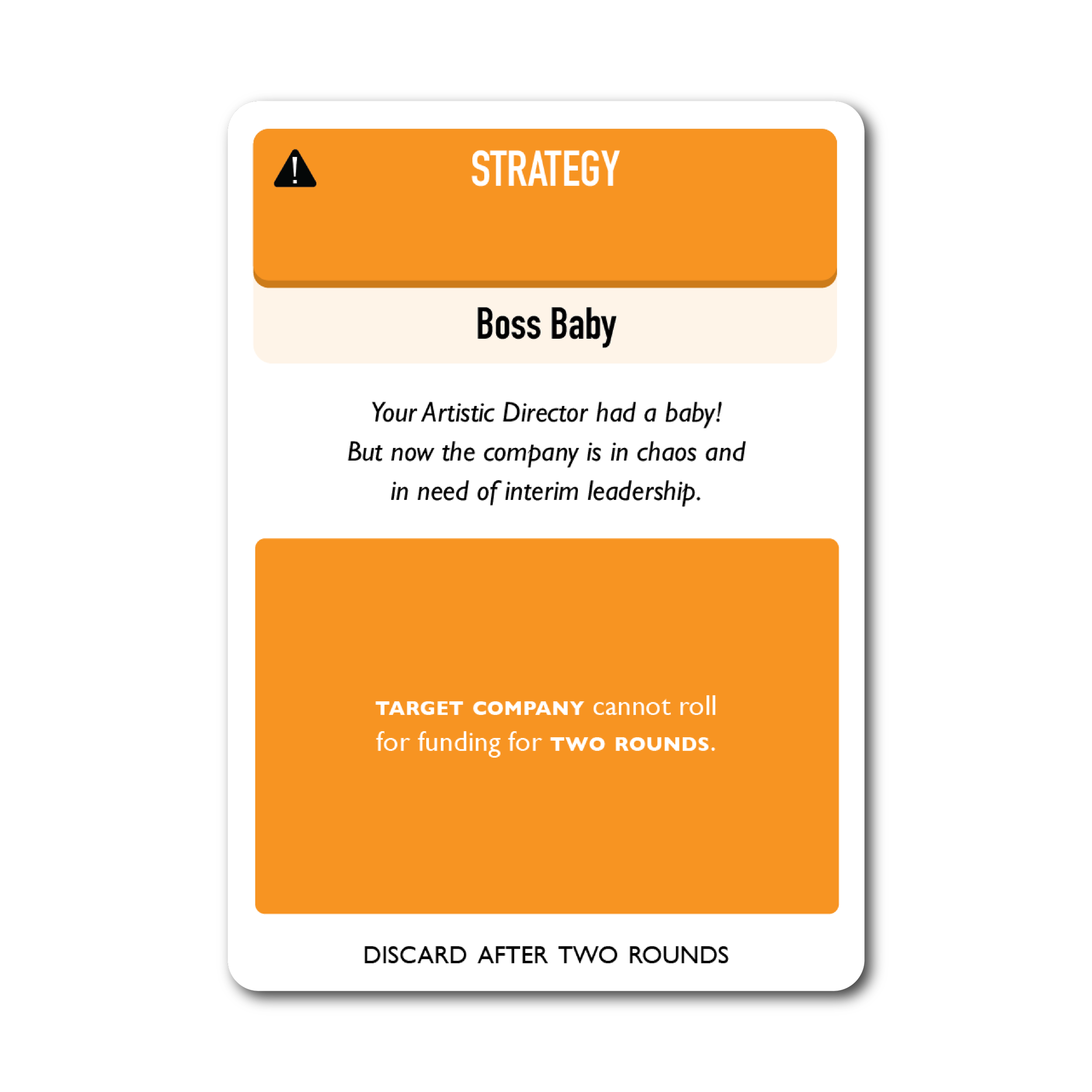
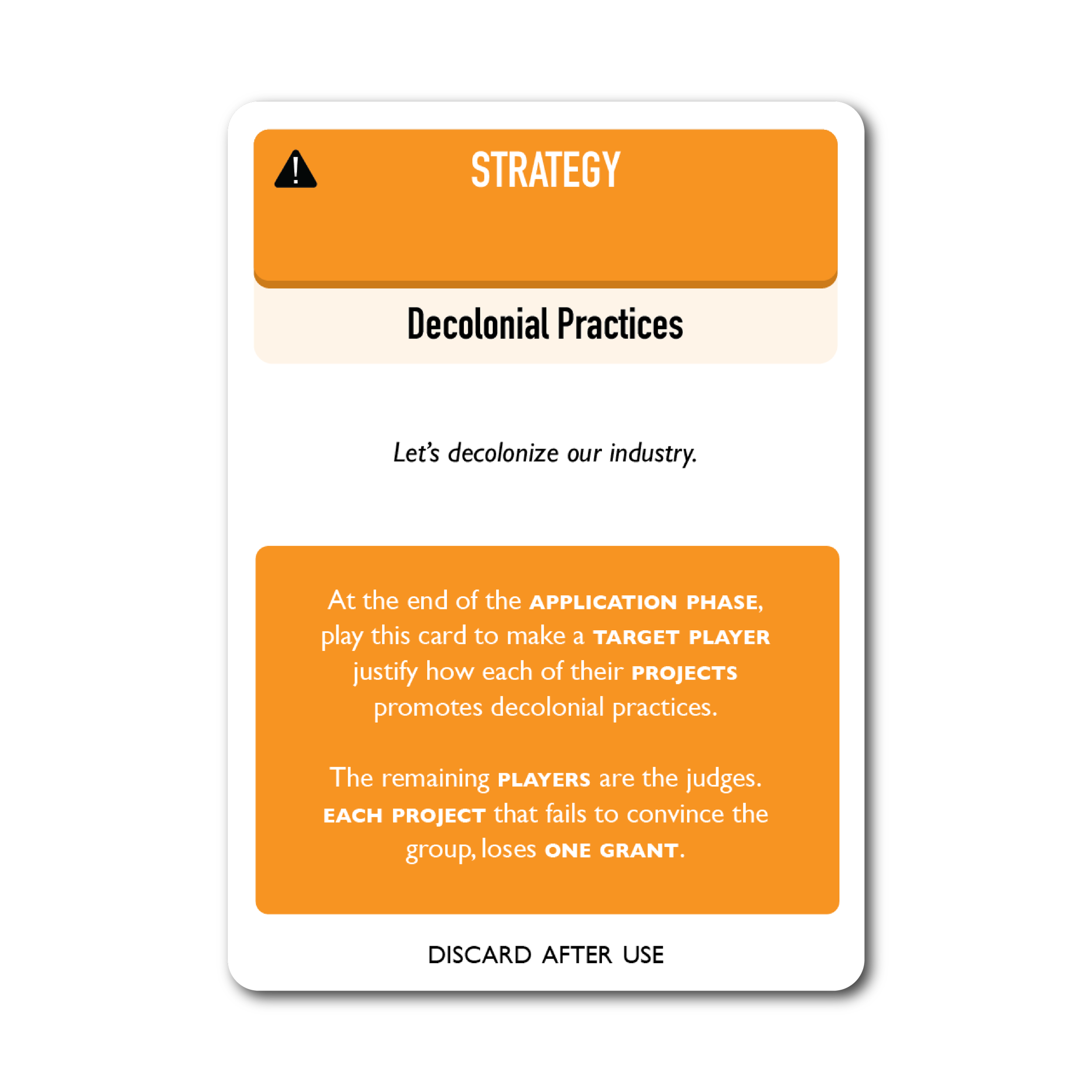
The processes of artistic production can change abruptly and unexpectedly. Strategies represent these turns, and you can use them to your advantage at any time during the game. Strategy cards are the most varied of the culturecapital cards—read each one carefully so you can understand what it does and how to use it!
On each Strategy card you will find three pieces of information:
Description of how to use the Strategy. Some cards will increase your Grant Power. Others will freeze all funding. And others still will change the flow of the game in unexpected ways.
Duration of how long the card can stay in play, ranging from single use to until the end of the game. This information is found at the bottom of Strategy cards.
-
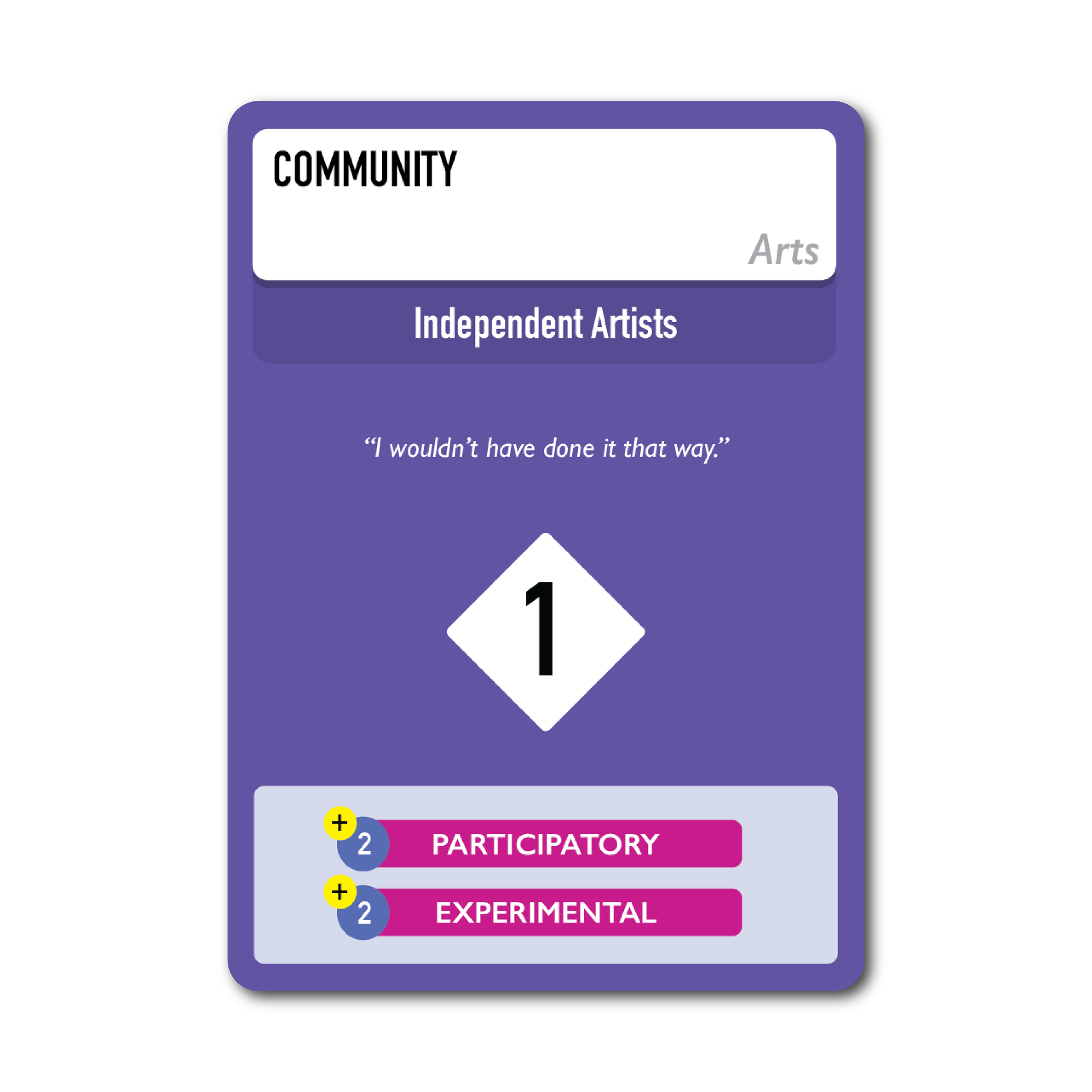
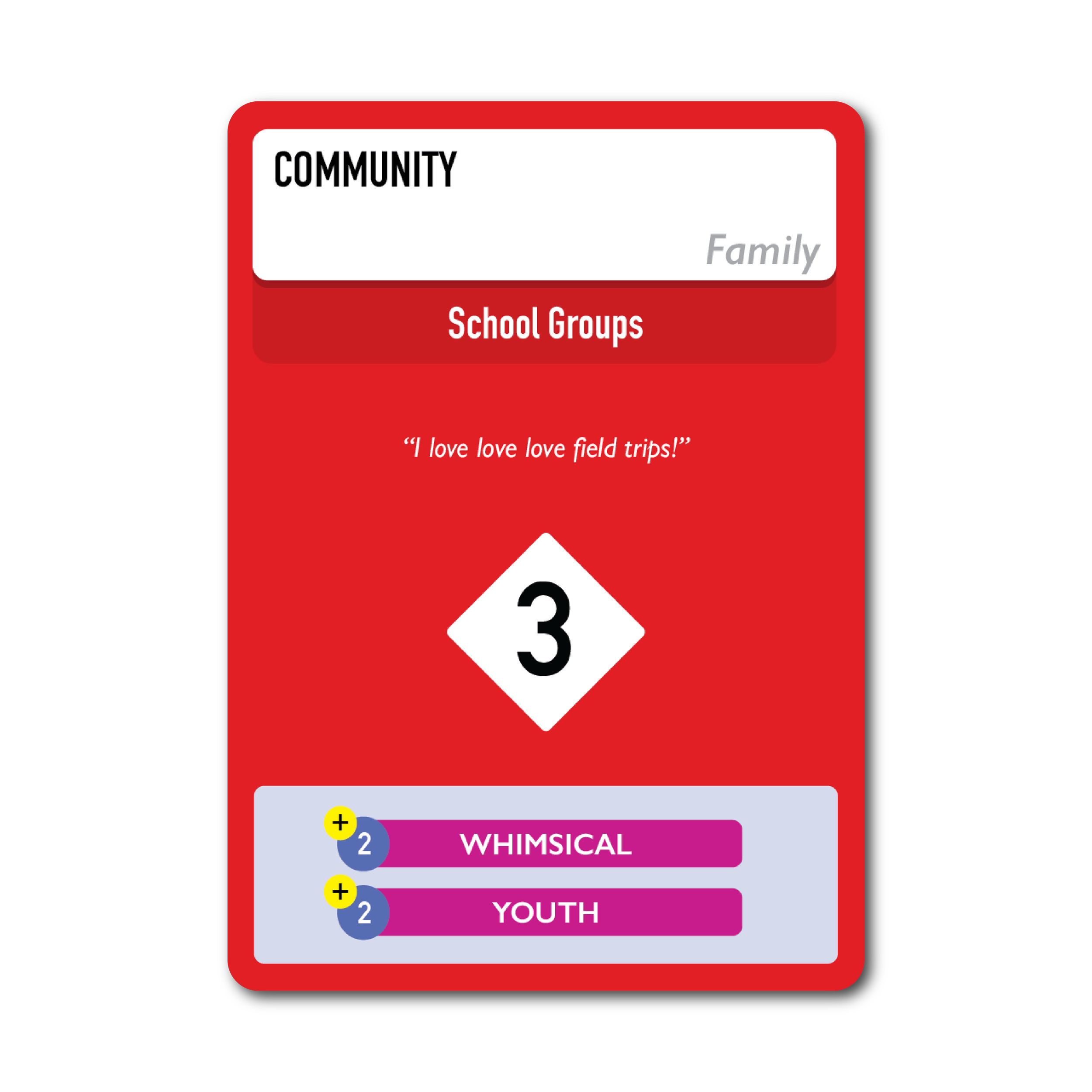
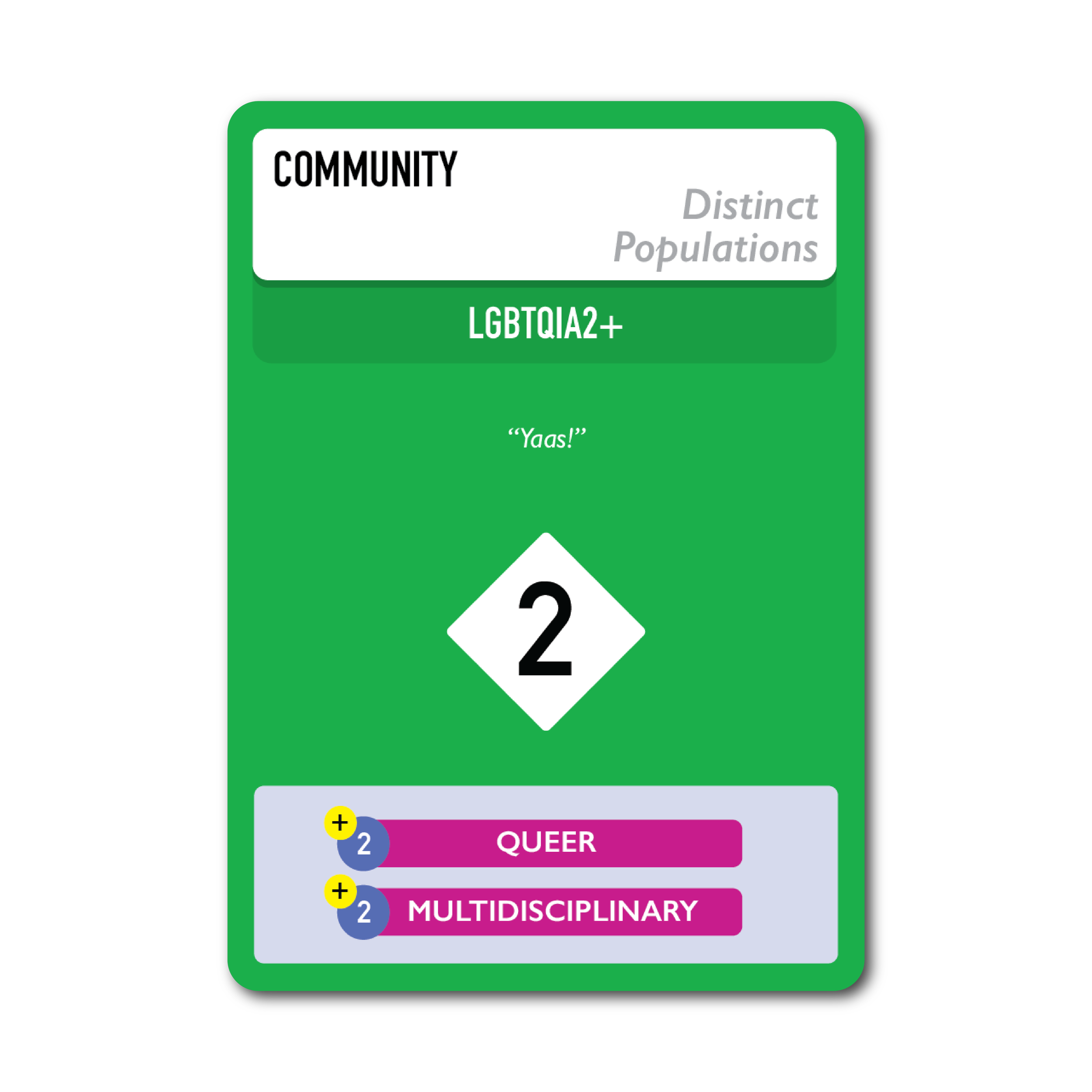
Communities are the final recipient of all your efforts. Of course, what’s the point of working if no one sees it?
Each card contains four pieces of information that you should take into account:
Community Group is the broader social group that a Community belongs to, which is indicated in the top right. Collecting Communities from the same Community Group gives bonuses at the end of the game!
Community Points of each community (between 1-3), can be found in the centre of the card. The Player with the highest amount of community points (symbolic capital) at the end, wins.
Keywords define a Community’s taste; each Community has two.
Boosts express the Community’s level of interest in the keywords. A Community can be targeted without matching keywords, though in this case—but the Project will receive no boost.
-
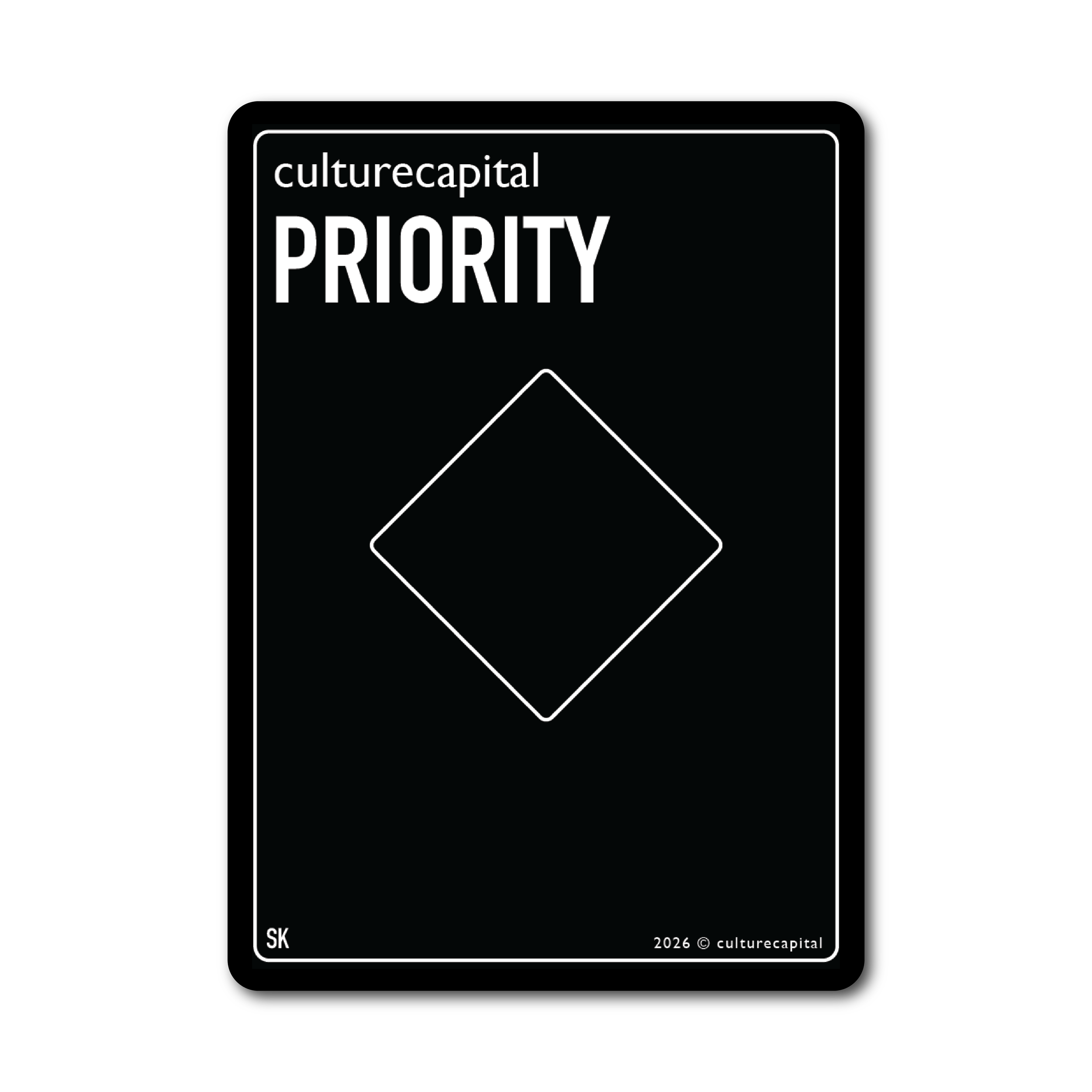
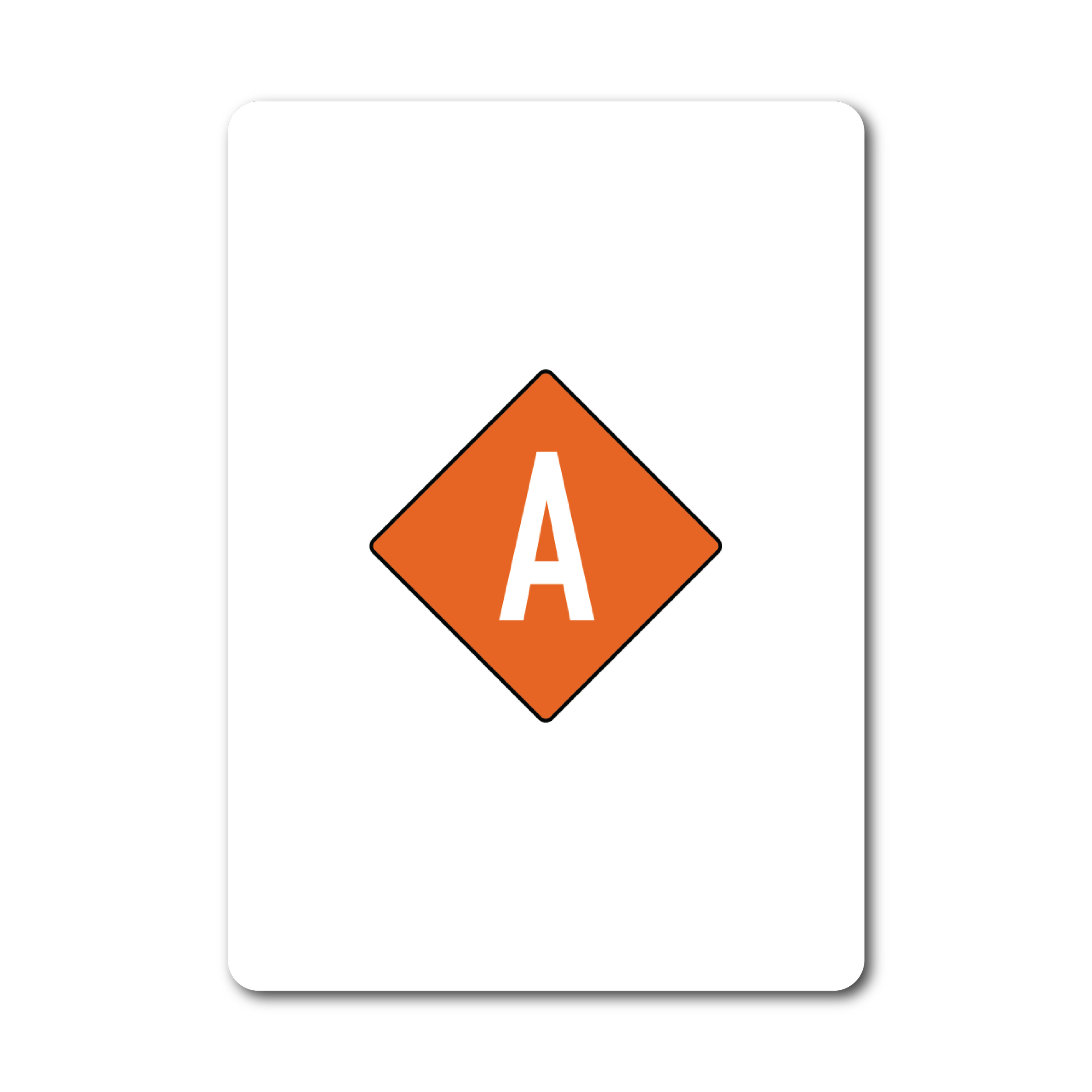
Priority Cards (A, B, C, D) are used by Players to signal which Project is competing for which Community. This happens in the Competition Phase of the turn order. Priority Cards have a letter on one side and are black on the reverse. They should be played face down to hide your targets; all Players will reveal their targeted Communities at the same time.
-
The Leader Badge marks who begins each turn within the game’s phases. At the end of each round, the Leader Badge is passed to the next Player, going clockwise.
-
The Community Organizer sits in the middle of the table and sorts the Communities into A, B, C, D positions.

PART 1: PLANNING PHASE
STEP 1: DISCARD AND REFILL
Starting with the Leader and working clockwise, each Player can discard as many cards as they want. When discarding, Players place unwanted cards face up under the deck of cards of its type.
NOTE: On the first turn of the game, discarding is not possible.
STEP 2 DRAW
After discarding, Players draw from any of the following 4 decks (Companies, Projects, Facts, or Strategies) to refill their hands to 7 cards.
If during the game you run out of cards in any of the 4 main piles (Company, Project, Fact, Strategy), reshuffle the discarded cards and flip them over to form a new deck.
STEP 3: PLACE COMPANIES AND PROJECTS
Next, and always starting with the Leader, Players take turns introducing the Companies they will work with and pairing them with Projects.
If you have Companies, you can put them on the table.
Each Player has a limit of 4 Companies that can be active on the table at any time. If you have Projects and you believe that you have a Company that can produce it, place that Project above the Company. Projects stay in development until the necessary funding is reached; in development Projects cannot compete for any of the Communities during Competition phases.
Each Company can only produce one Project at a time, unless there is a Strategy Card that suggests otherwise. At the start of your turn, you can also sacrifice a Company (and its Projects) and discard them all, or you can also sacrifice a Project, keeping the Company. In the latter, you must return any Grant Tokens held by the Company for the discarded Project (unless a Strategy card allows you to keep them).
BONUS: Part of the success of cultural management consists of convincing others of the relevance of our Projects. As you are playing feel free to explain why your Companies are producing these specific Projects.
STEP 4: ROLL FOR GRANTS
If you have Projects in development on the table, you can now seek funding. Starting with Leader, each Player rolls the die for each Project that they have in development. The Grant Power on your Company determines the probability of obtaining a Grant.
EXAMPLE: a Company with a Grant Power of 3 will obtain a Grant if it rolls a 1, 2, or 3. Companies with a probability of 6 automatically receive 1 Grant each turn.
IF YOUR GRANT REQUEST IS SUCCESSFUL
Successfully received Grant Tokens are placed on top of the Project Card that will use them. Grants cannot be transferred from one Project to another, unless a Strategy allows it. If your Project has all the Grant Tokens it needs, it becomes active and can compete for a Community in the Competition phase.
IF YOUR GRANT REQUEST IS UNSUCCESSFUL
If the odds were not in your Company’s favour, don’t worry. Your Project can roll again in the next round. (Unfortunately there’s no feedback on applications.)
NO PROJECTS ARE FULLY FUNDED
If once all Players have finished their turn, all Projects are still in development, the Competition phase of the game is skipped, the Leader Badge is passed to the next Player in clockwise order, and the Planning phase begins again, with the appropriate card changes.
If, on the other hand, there is at least ONE fully funded and active Project, the second phase of culturecapital begins: Competition.
PART 2: COMPETITION PHASE
The Competition Phase begins after all Players have completed the Planning Phase and if one or more Players’ Projects have received all of the necessary grants needed to become ACTIVE.
STEP 1: PRIORITIZING COMMUNITIES
A Priority Card designates which of the 4 Communities in play (A, B, C or D) at the centre of the table a given Project wants to target. Each Player with an ACTIVE Project will place a Priority Card face down on their Project.
STEP 2: REVEALING PRIORITIES
Once everyone has defined their Priorities in secret, all the cards are revealed at once.
STEP 3: PRESENTING PROJECTS
The Competition Phase moves through each Community on the table in order: A, B, C, then D.
If any Player has targeted Community A as a priority for any Project, the Player(s) must publicly present their Project and its initial value. To calculate the Project’s initial value, the Player adds the value of the Project (indicated in yellow on the Project card) and any added value obtained for EACH keyword that matches the Company that produces it and/or the Community it is targeting; this also includes any Fact cards attached to the Project from previous rounds.
The Project can receive boosts from multiple directions—from the Companies producing it AND from the Community it is targeting.
EXAMPLE: The Community in position A enjoys MUSICALS, so they will contribute an added value to any Project that has the keyword MUSICAL. If the producing Company ALSO has the keyword MUSICAL, the Project will ALSO receive the bonus designated on the Company. Matching Companies, Projects, and Communities isn’t necessary to play—but it can make a big difference on winning over Communities.
If different Players unknowingly decide to target the same Community, each interested Player must present their Project before any Player adds Fact cards.
STEP 4: FACTS
Once all the Projects competing for Community A have been presented, Fact cards can be played. Beginning with the Leader, and going clockwise, Players use Fact cards to increase or decrease the value of a Project, whether your own or someone else’s. Players can only play ONE Fact card before the next Player has the opportunity to respond or contribute.
STEP 5: PASSING
If a Player decides to pass and not play a Fact, they ‘fold’ and cannot play another Fact until the Competition Phase moves on to the next Community. Until a Player passes, all participating Players can continue to add Facts for all competing Projects to alter the scores.
STEP 6: WINNING AND LOSING A COMPETITION
When either all Players have passed or there are no more Facts to be played, the Project with the highest total value wins the Competition and the Project’s Player takes the Community.
NOTE: A Player can only win a Community as long as their Project’s final value is 0 or above. Projects that end with a negative final value cannot win a Community.
If a Project does not have the highest value and/or finishes a Competition with less than 0 points, the Project and the Company that produced it are discarded. Grant Tokens are returned to the central pile.
Once the Fact round for Community A is over, organize the Facts and Strategies tied to the surviving Project (unless the card says to discard them). These will remain in play as long as the Project is active. Now the Competition phase moves on to the next Community that has been targeted as a Priority (B, C, or D).
STEP 7: END OF COMPETITION
Once all 4 Communities in play have been addressed and the corresponding Fact rounds have been played, the Competition is over. Projects that have not collapsed remain active and can compete again in the next round again.
The Player with the Leader Badge passes it to the next Player in clockwise order. The new Leader returns the game to the Planning phase by refilling the Community cards in the center of the table, replacing the ones that have been won by Players in the recent Competition.
THE END OF THE GAME
The game ends when all the Community cards have been claimed. The Player with the most points, as determined by the numbers on the Community cards, including any bonuses for the Community Groups, wins.
VARIATIONS
Hardcore
We’re not really gamblers, but we recognize that culturecapital is ripe for integrating real money.
One way you could do this, we suppose, is by replacing Grants with real money, such as loonies, or $5 bills, etc. Rather than place Grants in the Government, Players fuel their projects with money from their own pockets.
Game play remains the same as the official tournament rules, but when you defeat one of your Opponent’s Companies, take the money powering their Company. And keep it. Or use it to fuel another Company of your own. You'll likely need to keep putting money into the Government as the game goes on.
Note: We don't have enough money to try this ourselves, but in theory we think it could work. Figure it out yourself.
Drunkcore
When everyone you know gets a grant but you, it can be hard not to turn to the bottle.
So if you want to make culturecapital your favourite drinking game, try adding one of the following rules:
- drink every time your Opponent receives a Grant
- drink everytime you fail to receive a Grant
- drink everytime you receive a Grant
Please remember to drink responsibly.